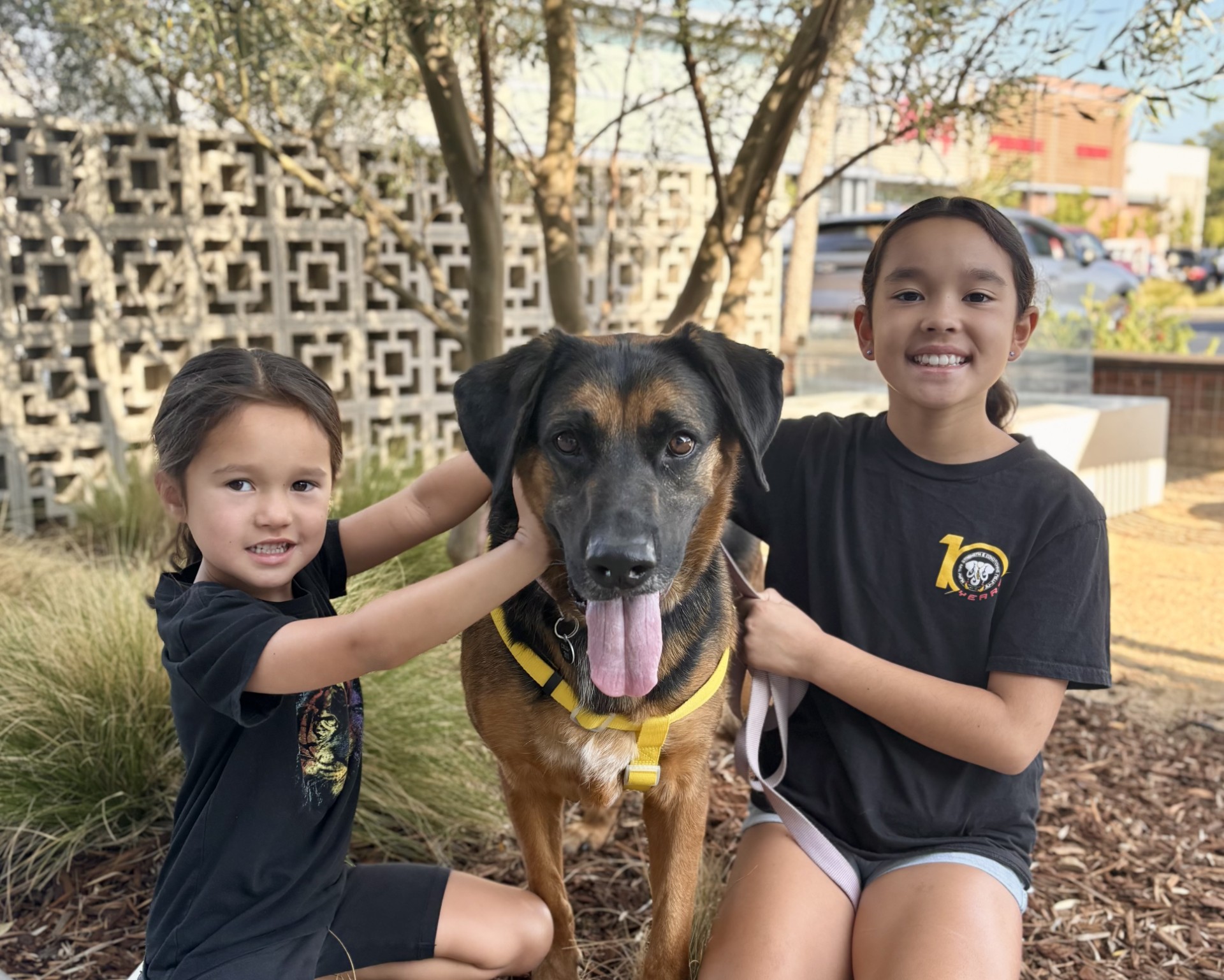
Caring for Your New Dog
Thank you for giving a shelter dog a second chance! Bringing a dog home is exciting — but those first days are key to helping your new best friend feel secure, loved, and set up for success.
The First Two Weeks
Your dog’s first two weeks are all about structure and calm introductions. Dogs thrive on routine, so begin teaching house rules immediately — no “free passes.”
Tips for success:
- Establish consistent potty routines and praise when they go outside.
- Keep your dog confined to a safe “doggie den” when you can’t supervise.
- Use chew toys or stuffed Kongs instead of food bowls for mental stimulation.
- Limit visitors at first to avoid stress and overstimulation.
- Start obedience training right away — it builds confidence and communication.
Patience is everything! Every dog adjusts at their own pace.
Introducing Your Dog to Other Dogs
Go slow and stay positive. Dogs are social but territorial by nature.
How to set them up for success:
- Meet on neutral ground with two handlers.
- Keep leashes loose and voices upbeat.
- Reward calm behavior and short interactions.
- Take walks together to bond.
- Watch for warning signs — raised hackles, stiff posture, growling.
- Feed and rest separately until they’ve built trust.
If tension develops, separate them calmly and consult a positive-reinforcement trainer.
Introducing Your Dog to Cats
Some dogs can live peacefully with cats — but only if introductions are slow and controlled.
Key steps:
- Start with scent swapping — exchange blankets or rub towels between them.
- Feed both pets on opposite sides of a closed door.
- Gradually open the door for brief glimpses.
- Keep dogs leashed during face-to-face sessions.
- Reward calm behavior and allow your cat to approach on their own terms.
Never let your dog chase the cat, even “playfully.” Supervise all interactions until both are relaxed.
Introducing Kids and Dogs
Set everyone up for success with positive, safe first meetings.
Parent essentials:
- Have kids sit quietly and let the dog come to them.
- No hugging, staring, or reaching over the dog’s head.
- Teach “quiet and slow” movements.
- Never leave dogs and children unsupervised.
- Show kids how to respect a dog’s food, toys, and resting space.
Good habits early build lifelong friendships.
Make Your Dog Part of the Family
Dogs need companionship just like we do. Outdoor-only living can cause loneliness, fear, and behavior problems.
Why indoor dogs are happier:
- They bond better and feel safer.
- They’re protected from cars, weather, and theft.
- They’re calmer, healthier, and more trainable.
If you must leave your dog outdoors for part of the day, provide shelter, shade, fresh water, safe fencing, and daily interaction.
Training & Leadership
Dogs don’t need dominance — they need benevolent leadership. Be calm, consistent, and positive. Reward good behavior instead of punishing mistakes.
Be your dog’s best leader by:
- Controlling food and toys — make your dog “work” for rewards.
- Setting boundaries calmly and clearly.
- Being consistent with rules and routines.
- Using positive reinforcement — treats, praise, play.
- Enrolling in reward-based training classes only.
Leadership built on trust creates a happy, confident dog.
ID, Licensing & Safety
Always keep identification visible.
Quick checklist:
- Microchip and tag your pet with current info.
- Use a secure buckle collar (no choke or prong collars).
- License your pet — it’s their ticket home if lost.
Health & Behavior Resources
If your new dog develops coughing, sneezing, or nasal discharge, it could be a mild upper respiratory infection (URI) common in shelter dogs. Most recover quickly with vet care and rest.
Behavior support: Bradshaw Animal Shelter and local partners offer discounted positive-reinforcement classes for adopted dogs.